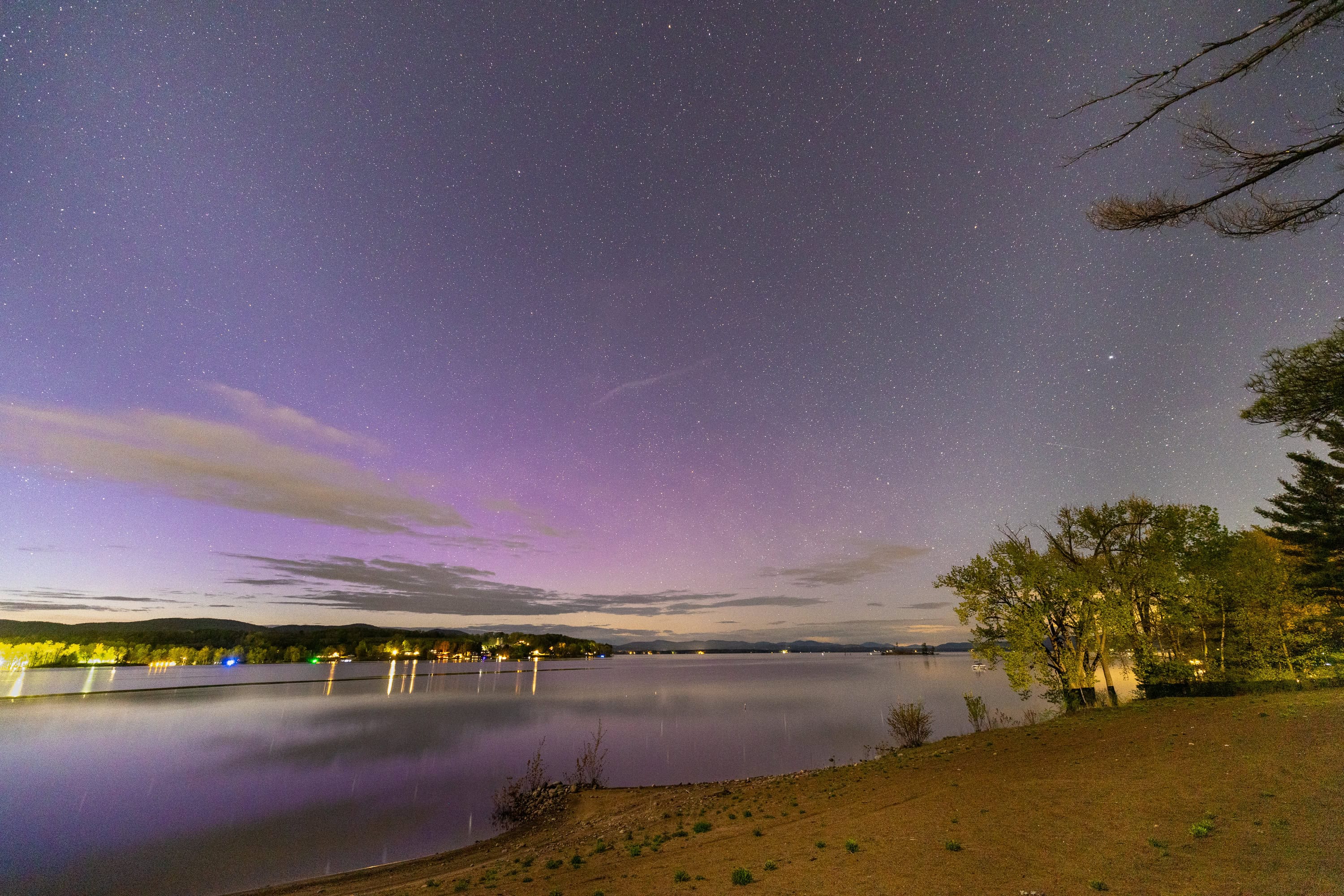
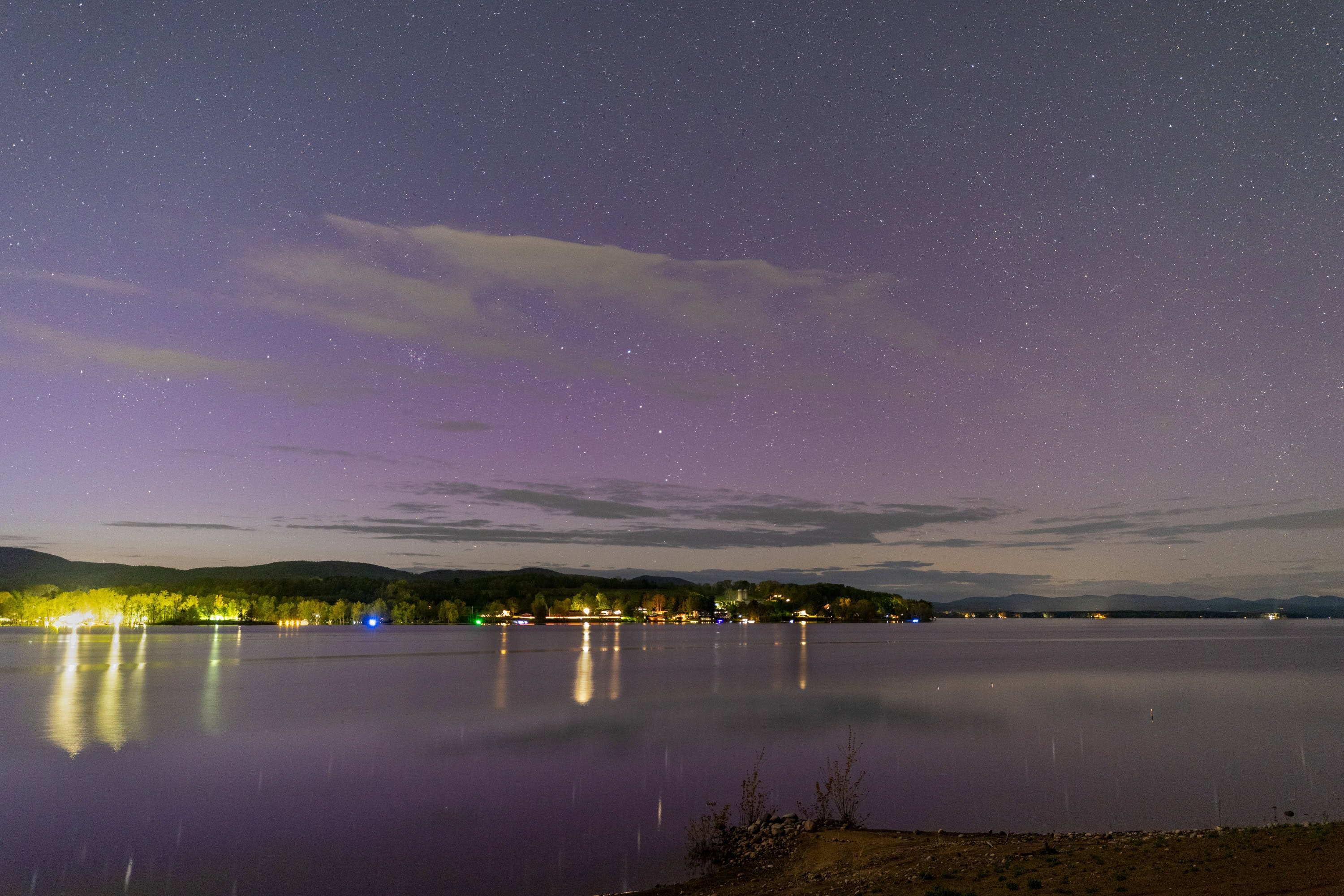
Early May brought whispers of geomagnetic activity, prompting a late run up to Vandenburgh Point on the Great Sacandaga in Mayfield. What registered on the sensor wasn’t a blazing pillar storm, but a quiet, subtle purple wash lingering low along the northern horizon and bleeding into the water reflections. Even in its faintest form, seeing that atmospheric glow materialize on the back of the camera was an unmistakable thrill. Standing in the cold spring air on the lake bank, I had no inkling of the historic celestial fireworks the Adirondack skies had in store for the rest of the year.
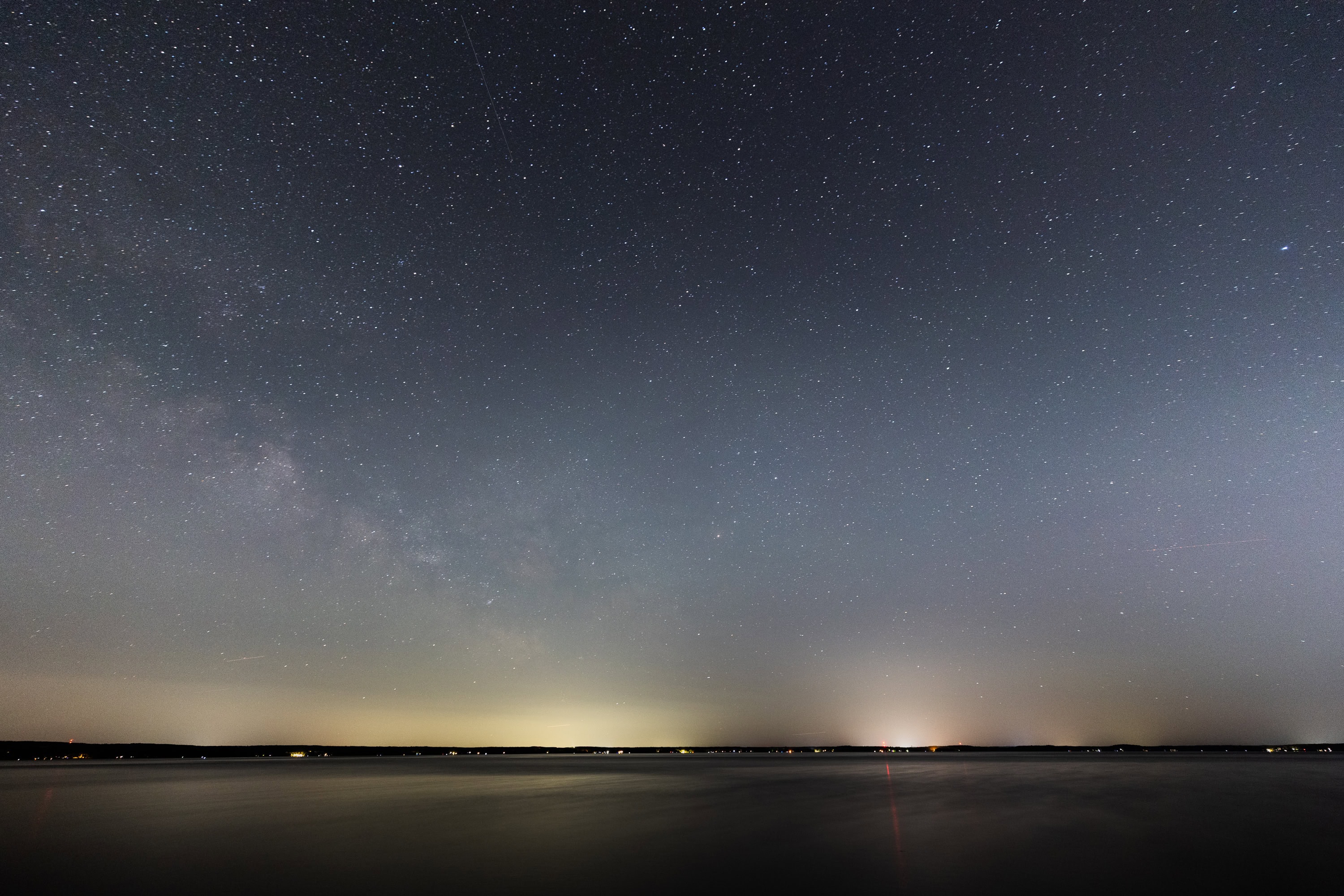
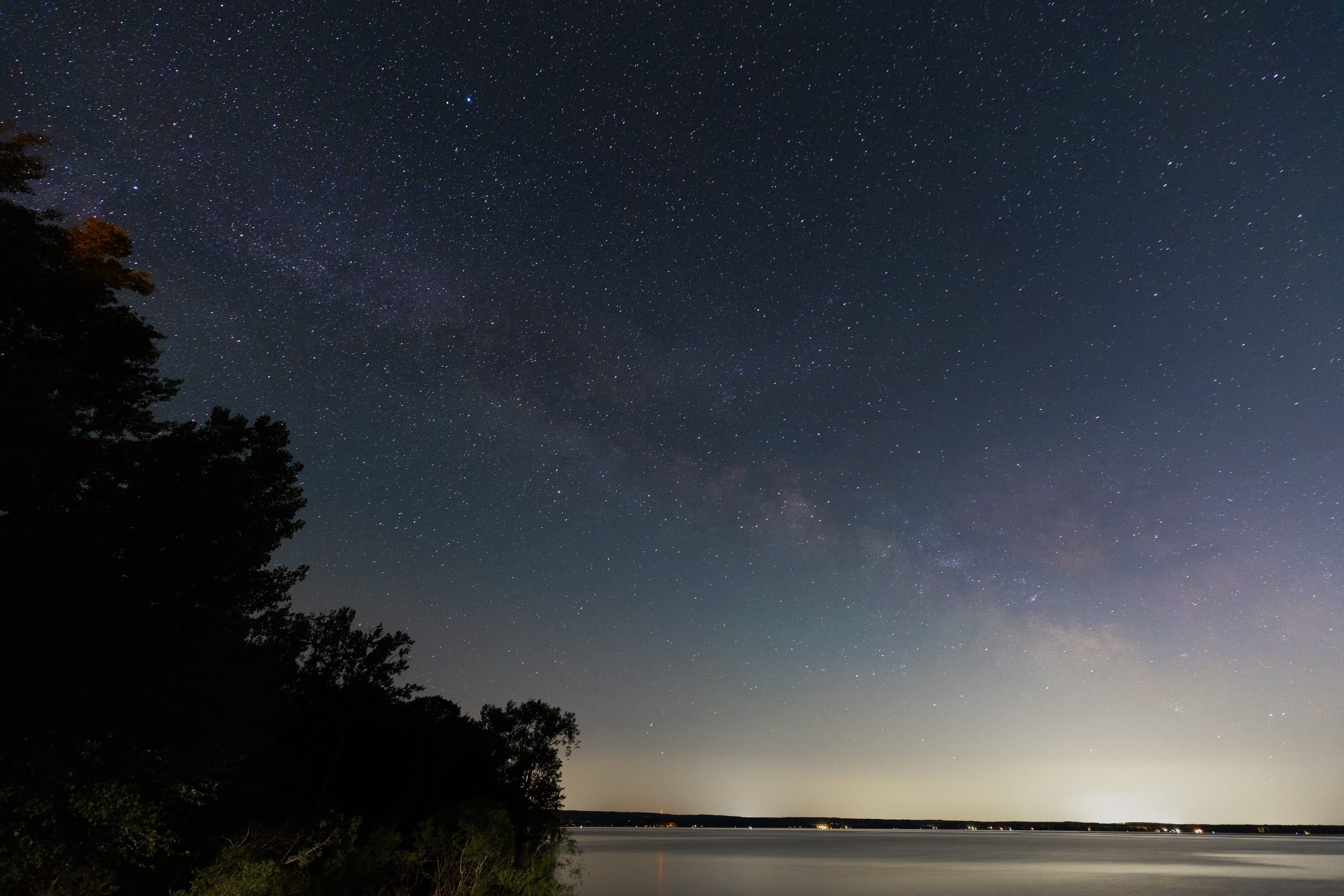
Later in the month, I traveled further north to the Hudson River–Black River Regulating District field office shoreline and turned the camera toward the south to chase an early-season Milky Way core. The galactic arch hung low against a persistent dome of shoreline light pollution, making for a challenging, washed-out capture rather than a dramatic portfolio centerpiece. But night photography isn’t just about the banner nights; it’s about putting in the reps in the dark. Working the tripod on uneven ground, dialing in manual focus on dim guide stars, and building that tactile muscle memory with shutter and ISO settings were essential groundwork—practice that would pay massive dividends once the deep-summer dark skies arrived.