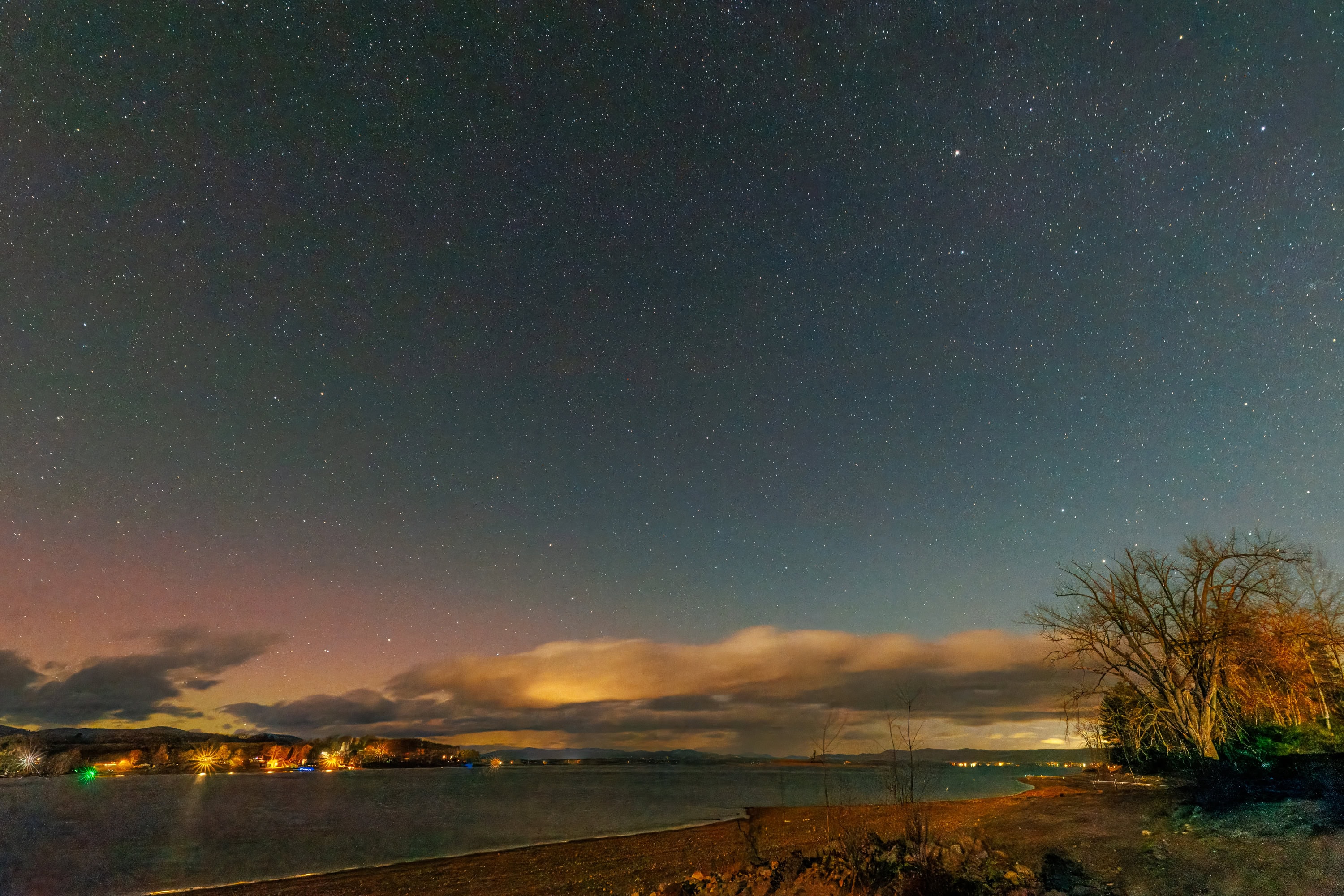
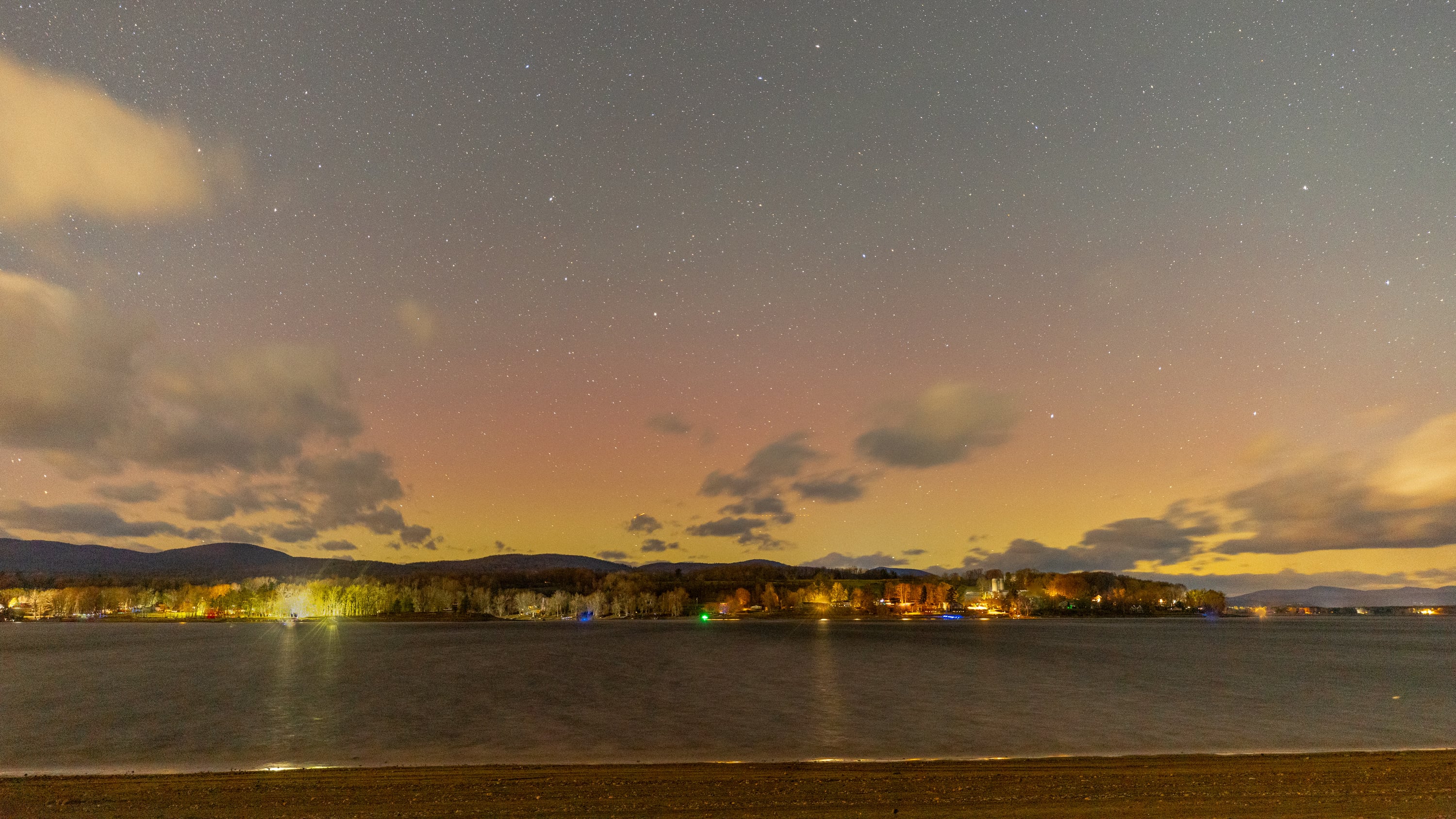
By November, the frenetic celestial activity that defined late summer and autumn began to quiet down. On November 8th, I headed back to familiar ground at Vandenburgh Point for one last look north over Great Sacandaga Lake. The storm activity wasn’t the raging magenta sky of August, but a subtle, warm amber-purple atmospheric glow hovering over the low cloud deck and the distant lights of the village. The night was crisp, quiet, and reflective—a fitting bookend that echoed the faint spring glows from six months earlier.
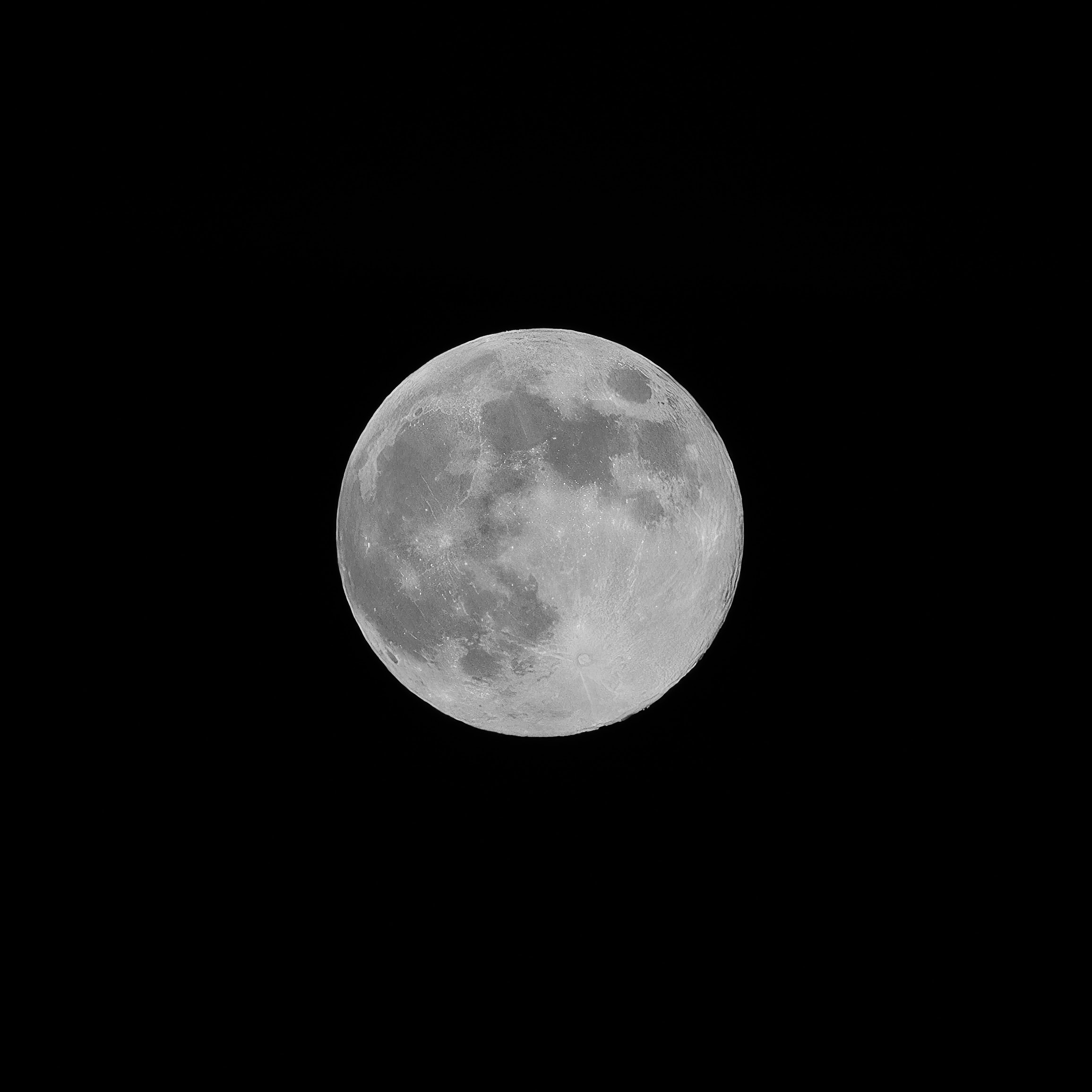
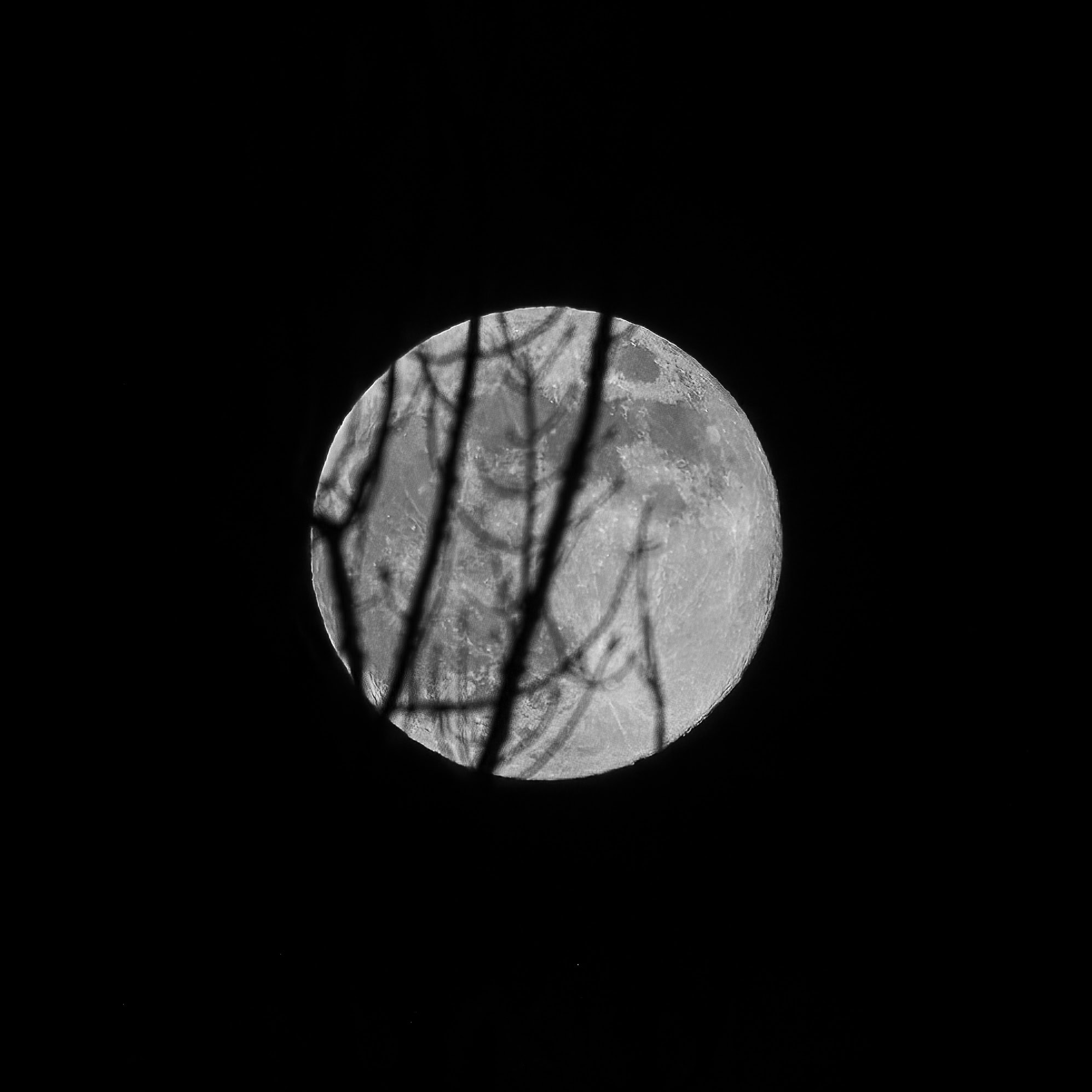
A week later on November 15th, I drove up to the Hudson River–Black River Regulating District field office to work the full Beaver Moon. I had visualized a dramatic telephoto composition—catching the local eagle’s nest sharply backlit against the bright lunar disk. But field reality rarely matches the mental sketch: between the moon’s angle and my late arrival, the alignment just wasn’t there, requiring far more reach than my 100-400mm could muster. I probably should have pivoted and thrown on a wide-angle lens for a moonlit shoreline landscape, but having only packed the long telephoto, I worked the tree branches raking across the lunar surface instead. In the end, these final outings were simply about refusing to let the season go—trying to stretch out the thrill of night photography just a little longer while the comet faded into deep space and the galactic core slipped below the horizon for winter.